
A new randomized study tests whether posture affects urine flow in healthy men and what it means for women and for anyone who hovers over public toilets
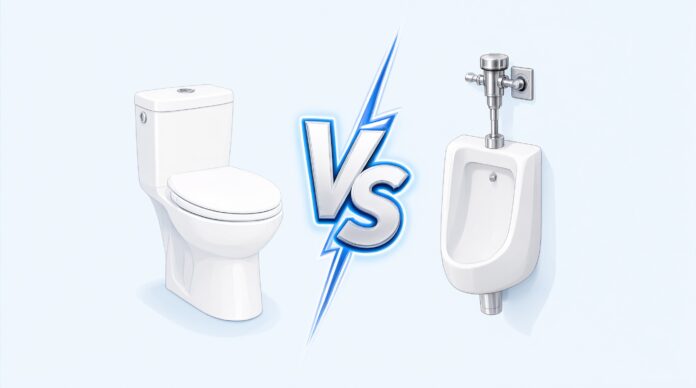
Should men urinate standing up or sitting down? It sounds trivial, but there is a medical reason to ask. Earlier research suggested that men with prostate problems or urinary difficulties might empty their bladders more easily while seated, possibly because sitting lets the pelvic floor muscles relax. Still, the overall evidence has been patchy and far from conclusive.
A new test with a modest result
To get a clearer answer, the Colombian Urology Research Group ran a randomized study, published in Neurourology and Urodynamics. It involved 52 healthy male volunteers, who were tested in both postures with a 24-hour “washout” gap between sessions. The researchers measured two things: peak urine flow rate and the total volume passed in a single void.
For healthy men, posture made no meaningful difference to either. The only gap was in how fast flow reached its peak, which was slightly quicker when seated. The authors considered this too small to matter clinically and noted that it depended partly on a single outlier.
Why it may matter more for some men
As explained here, these findings apply to healthy men. Those with an enlarged prostate, a weak stream, or a feeling of incomplete emptying were not the focus, and they may still benefit from sitting, since it encourages muscle relaxation.
Men and women are not the same
Anatomy explains why the answer differs by sex. Men have a long urethra, roughly 18 to 20 cm, which passes through the prostate. A healthy man can empty his bladder well while standing. Women have a much shorter urethra, around 4 cm, and a pelvic floor that supports the bladder, uterus, and vagina. Full bladder emptying depends on those muscles relaxing completely, which is easiest when seated with proper support.
The public toilet habit: hovering
Many women (and some men) hover above the seat to avoid touching it. This is not a pelvic floor workout. Hovering keeps the thigh, buttock, and pelvic floor muscles tense to hold the position, which works against the relaxation needed to urinate properly. Small studies, mostly in women, link it to a weaker flow and more leftover urine in the bladder, and the habit may encourage straining. Over time, this could add stress to the pelvic floor and raise the risk of urinary infections, and it may worsen symptoms in people whose pelvic floor is already overly tight. Evidence of long-term harm is limited, but pelvic health specialists generally advise against making it a habit.
Real strengthening comes from dedicated exercises such as Kegels, done separately from urinating.
Practical tips
- Wipe the seat or use a disposable cover, then sit normally.
- If sitting is really not an option, a semi-squat with relaxed muscles and no pushing is better than a full hover. Treat it as an exception.
- After urinating, wait a few seconds to make sure your bladder is empty.
- See a doctor or pelvic floor physiotherapist if you have pain, urgency, difficulty emptying, or repeated infections.
This is general information, not medical advice.