
The odd story of an emperor, a tax on urine, and a phrase that outlived them both
“Money doesn’t stink.”
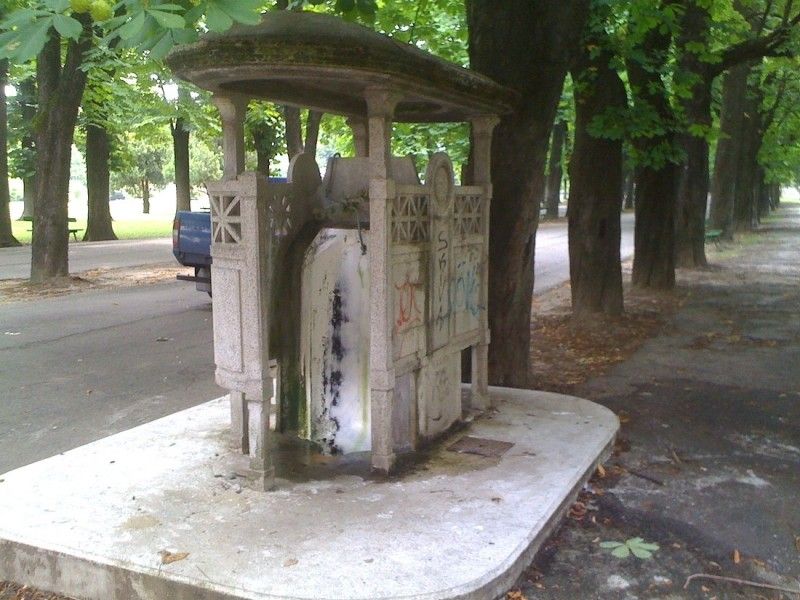
The phrase is often attributed to the Roman emperor Vespasian, and it is the reason a public urinal is still called a vespasiano in Italian. Until a few decades ago, these street urinals were a familiar sight in Italian cities. Today they have almost disappeared, but the name survives, and so does the story behind it.
Why urine was worth money
In ancient Rome, few homes had a private toilet, so people relied on public latrines or on vessels left at street corners. The contents did not go to waste. Urine breaks down into ammonia, which is excellent for cleaning and degreasing, and Rome’s fullones (fullers) used it in their workshops, the fullonicae, to clean and prepare cloth, especially wool. Collecting urine was a trade, and a profitable one.
The emperor’s tax
Vespasian ruled from 69 to 79 A.D. He inherited an empire whose finances had been drained by years of civil war and by the extravagance of Nero. To refill the treasury, he introduced new taxes and raised existing ones, among them the vectigal urinae, a levy on the trade in urine. Historians still debate exactly who paid it, but it clearly targeted the commerce that had grown around public latrines and the fullers who bought the product.
The famous line
The Roman historian Suetonius tells us that Vespasian’s son Titus found the tax distasteful. Vespasian held up the first money it had raised, brought it to his son’s nose, and asked whether it smelled bad. When Titus said no, the emperor replied that it nevertheless came from urine.
The Latin proverb pecunia non olet (“money doesn’t stink”) is a later, condensed version of that exchange, not Suetonius’s exact words. The meaning is the same: money has no smell, whatever its source.
How the emperor’s name ended up on a urinal
The link between Vespasian and public toilets is much younger than the tax. It appeared in the 19th century, when cities began installing street urinals. In Paris they were called vespasiennes, and the Italian vespasiano followed, a half-joking reference to the emperor and his tax. Wits of the time apparently found the connection too good to resist, and it stuck.
From street corner to history books
Modern cities now have shopping centers, cafés, and public facilities, but the vespasiano once filled a real need, especially late at night when everything else was closed. Its name remains a small reminder that a Roman emperor’s pragmatism and his sense of humor are still part of everyday Italian.
With the disappearance of the vespasiani, a very old problem has resurfaced: where to relieve yourself when there are no other public toilets, since open venues require a purchase to use the restroom, and, especially late at night, nothing is open.