
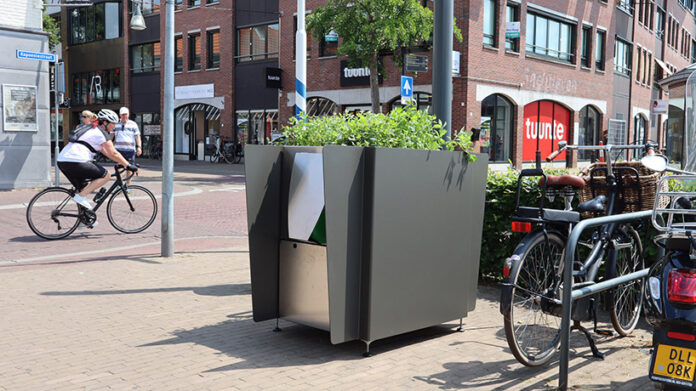

A Dutch environmental psychologist’s waterless, hemp-filled urinal tackles public urination while recycling urine for the city’s green spaces
An old problem with a Dutch name
Amsterdam has a word for it: wildplassen. The city has too few public toilets, and the ones that exist charge about a euro, so many people simply go against a wall or into a canal. The consequences go beyond smell. Urine erodes historic walls, and it has been linked to the deaths of several young men a year who try to relieve themselves into a canal late at night. Reports put the average at about 15 canal drownings a year from various causes, including public urination.
The city has tried to discourage it. Officials issued fines of up to €140 and introduced retractable outdoor urinals for women. The fines have also caused controversy. In 2015, a 23-year-old woman fined for peeing in Leidseplein started a national sexism debate, since the city had 35 public urinals for men and only three toilets for women.
What came before
As explained here, Amsterdam’s best-known answer is the plaskrul or “pee curl.” These public urinals date from the late 19th century and were first installed by the city’s Public Works Department. They drain into the sewer and are cleaned by the municipality with canal water. Those along the canals are also meant to stop people from falling in while urinating.
For Richard de Vries, such facilities fall short. His company argues that existing provisions are often inadequate and spoil the look of the street. His approach is to make the urinal something people want to see in the street.
The people behind GreenPee
GreenPee is a product of Urban Senses, a consultancy on safety and liveability based in Vlaardingen. De Vries describes himself as an environmental psychologist who tries to encourage positive behavior in public space. His reasoning was that cities usually fight wild peeing by creating a sense of ownership and of being watched, which works, but the urge remains. So he proposed a planter that would green the city and double as a urinal.
The first test came in 2018, when four units were placed in and around Rembrandtsplein, and an independent study found public urination in one street, the Schapensteeg, fell by 49%. In 2020, the idea scaled up. The council rushed to install urinals as tourists returned and pubs reopened after lockdown, and eight new units brought the city’s total to 12. GreenPees have since appeared in Vlaardingen and Beekbergen in the Netherlands and in Mechelen and Genk in Belgium, and Tilburg is running a one-year experiment. De Vries wants to take the concept abroad and is researching how to generate electricity from the urine.
How it works
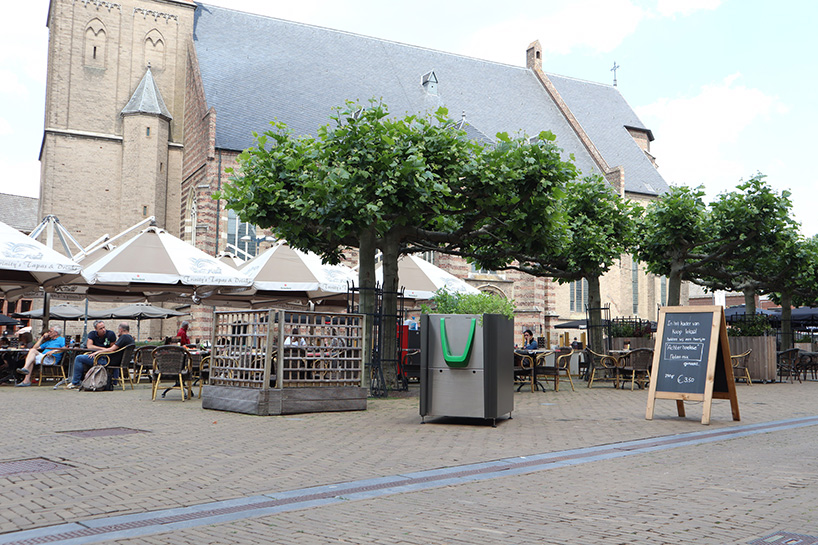
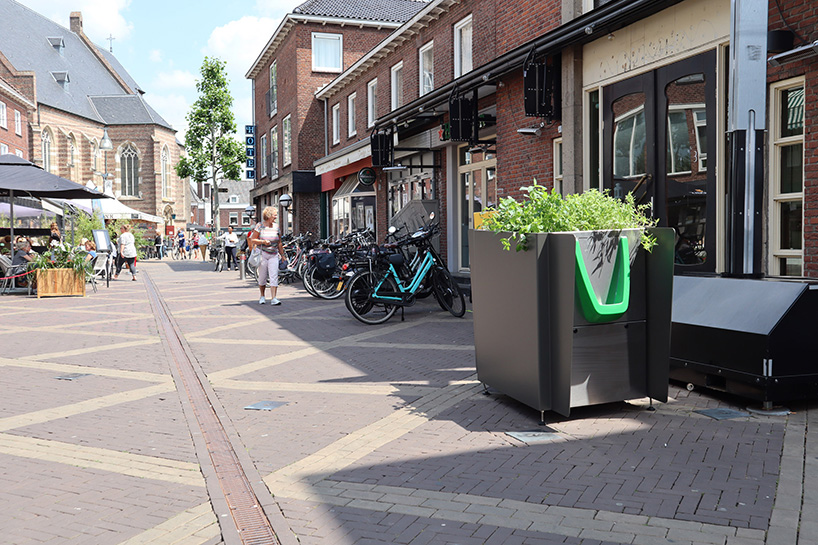
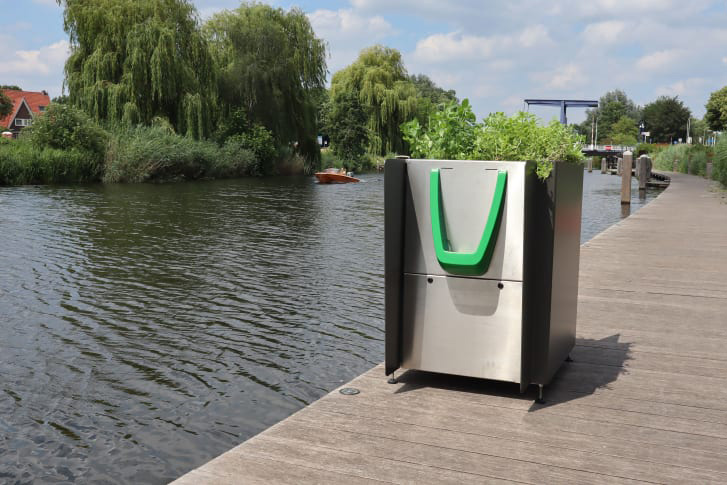
The tank. The unit needs no water or sewer connection. Urine is collected in a container of odor-absorbing hemp fiber. Hemp is a sensible choice, since it has long been used as bedding in composting toilets. Capacity depends on the model: the single is good for about 300 uses and the double for 450.
Emptying and recycling. When a tank is full, it is swapped for an empty one. The liquid is processed into clean water, and the remaining mix of urine and hemp is composted into organic fertilizer. The fertilizer is rich in phosphate, a resource De Vries calls scarce because phosphate mines are running dry, which makes recycling it from urine a sustainable alternative to flushing it away. Treatment also matters because urine can carry undigested pharmaceuticals that harm the environment.
The plants. Counterintuitively, the urine is not used to water the plants, because it would kill them. Instead, a 30-liter reservoir collects rainwater and feeds the soil through wicks, so the plants need manual watering only occasionally. For Amsterdam, De Vries planned something like grass with decorative plumes. He also designed the planter to sit at a height that makes it unattractive to urinate on the plants.
Built for the street. The Amsterdam version added privacy screens, and it is designed to be vandal-proof. The company describes the stainless-steel body as hooligan-proof. A sensor can send a text message when the tank is nearly full.